
Featured Lighting Solutions for Convention & Exhibition Halls
The Commercial Landscape of Tech Lighting in Large-Scale Convention Centers
The global market for professional tech lighting in convention centers and exhibition halls has undergone a profound transformation over the past decade. Driven by accelerating digitalization, the rising demand for unforgettable attendee experiences, and the widespread adoption of energy-efficient LED technologies, the industry is forecasted to exceed USD 18 billion by 2028. Convention centers today are no longer passive venues — they are dynamic, programmable environments where lighting plays a central role in branding, wayfinding, entertainment, and energy management.
Large-scale convention centers, such as those hosting international trade shows, government summits, automotive exhibitions, and entertainment expos, require lighting ecosystems capable of serving thousands of square meters across multiple halls simultaneously. The complexity of managing hundreds of independently controlled fixtures — from stage wash lights and architectural LEDs to kinetic ceiling installations and interactive floor systems — demands professional-grade DMX control infrastructure and intelligent automation platforms.
Key Insight: Modern convention centers are investing 15–25% more in intelligent lighting infrastructure compared to five years ago, recognizing that programmable tech lighting directly increases venue booking rates and premium event revenues by an average of 30%.
From a commercial perspective, multi-purpose exhibition halls face unique challenges: the same space must transition within hours from a formal government conference to a high-energy product launch, a live concert, or an international gala dinner. Tech lighting systems — especially those built on DMX 512 protocol, kinetic LED rigging, and programmable RGB matrix arrays — are the cornerstone technology enabling this versatility at scale.
Global Industry at a Glance
Emerging Development Trends in Tech Lighting for Exhibition Venues
The next generation of convention center lighting is defined by connectivity, intelligence, and sensory immersion. Here are the key trends reshaping the industry.
AI-Driven Automation
Intelligent lighting management systems now use AI algorithms to automatically adjust brightness, color temperature, and scene transitions based on real-time occupancy data, event schedules, and even weather conditions.
IP-Networked DMX Over Ethernet
Art-Net and sACN protocols are replacing traditional DMX cabling in large venues, enabling lighting designers to control thousands of fixtures across massive floor plans via standard IT network infrastructure.
Kinetic & Moving Architecture
Motorized kinetic LED arrays, programmable ceiling grids, and 3D matrix light sculptures are becoming standard feature elements in premium convention centers, enabling truly cinematic spatial transformations.
Sustainable LED Ecosystems
Convention centers are mandating LEED-compliant lighting with smart dimming, daylight harvesting, and heat-reduction technologies — driving full transitions to high-efficiency LED tech lighting systems.
Interactive & Responsive Lighting
Sensor-triggered and audience-reactive lighting systems are creating immersive brand experiences at product launches, turning passive exhibition attendees into active participants.
Cloud-Based Scene Management
Cloud-synchronized lighting consoles allow remote event production teams to pre-program complex multi-venue shows from anywhere in the world, reducing on-site technical labor costs significantly.
Deep-Dive: Application Scenarios in Convention Centers & Exhibition Halls
Tech lighting solutions must perform across radically different operational contexts within the same multi-purpose venue. Here's how professional-grade systems address each scenario.
International Trade Shows & Expo Floors
Exhibition floors demand uniform, high-CRI ambient lighting that accurately renders product colors and finishes. Zoned DMX control enables individual booth lighting while kinetic overhead installations create visual landmarks for navigation and brand identity. RGB wash lighting sets event-wide color themes on demand.
Keynote Stages & Plenary Auditoriums
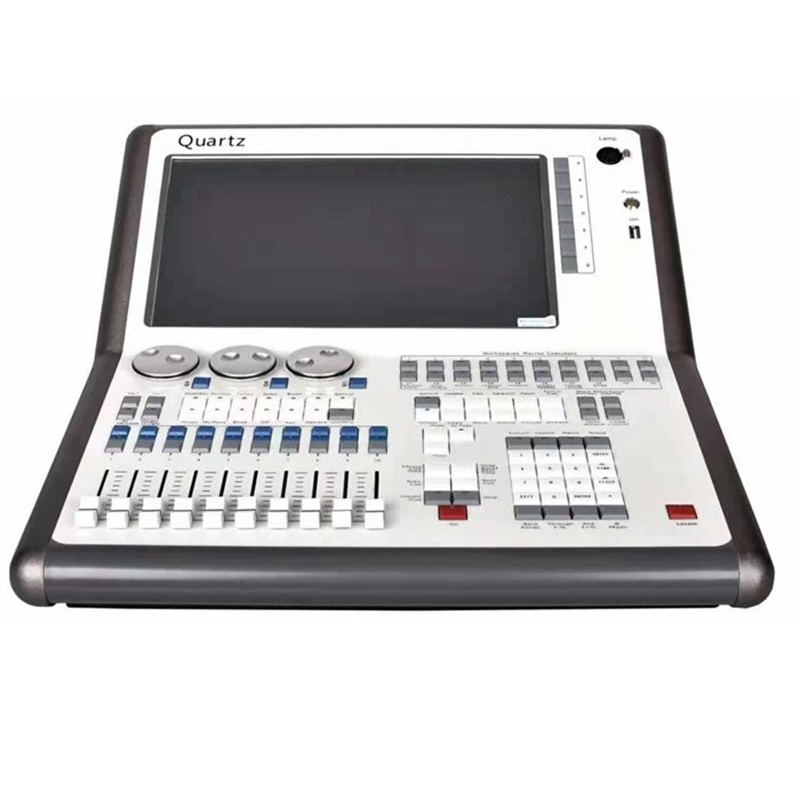
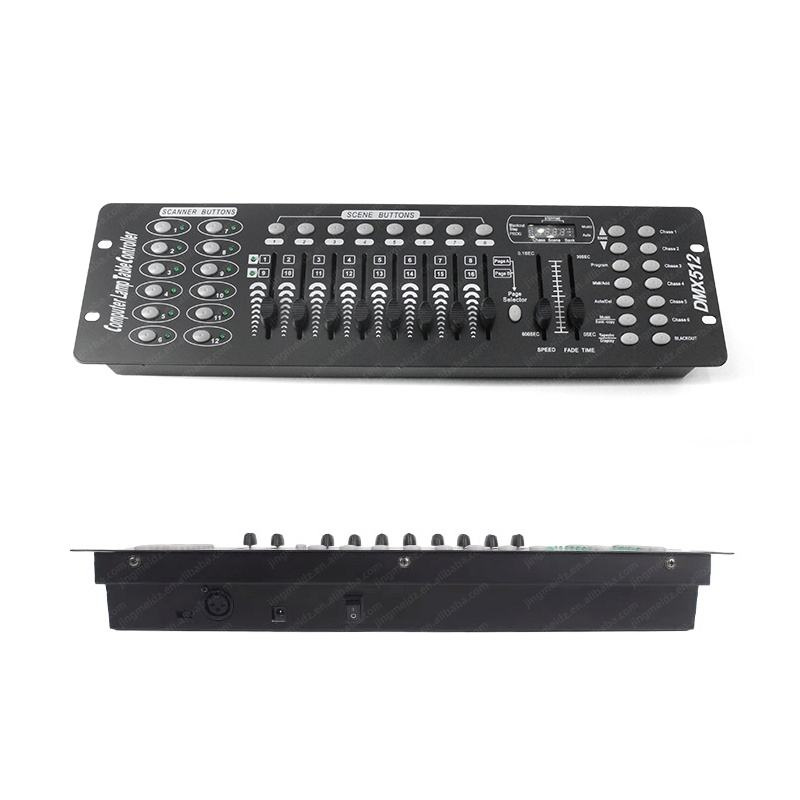
Main stage lighting for conventions requires powerful moving head fixtures, precise follow-spot systems, and programmable LED backdrop walls. DMX 2048-channel consoles coordinate real-time lighting cues with AV production, IMAG screens, and broadcast camera requirements for global live-stream audiences.
Banquet Halls & Award Ceremonies
Gala dinners and award ceremonies require theatrical lighting that transitions seamlessly from elegant ambient warmth during reception to dramatic spotlighting during presentations. 3D matrix LED sculptures and architectural lighting elements transform standard banquet configurations into premium branded environments.
Automotive & Technology Product Launches
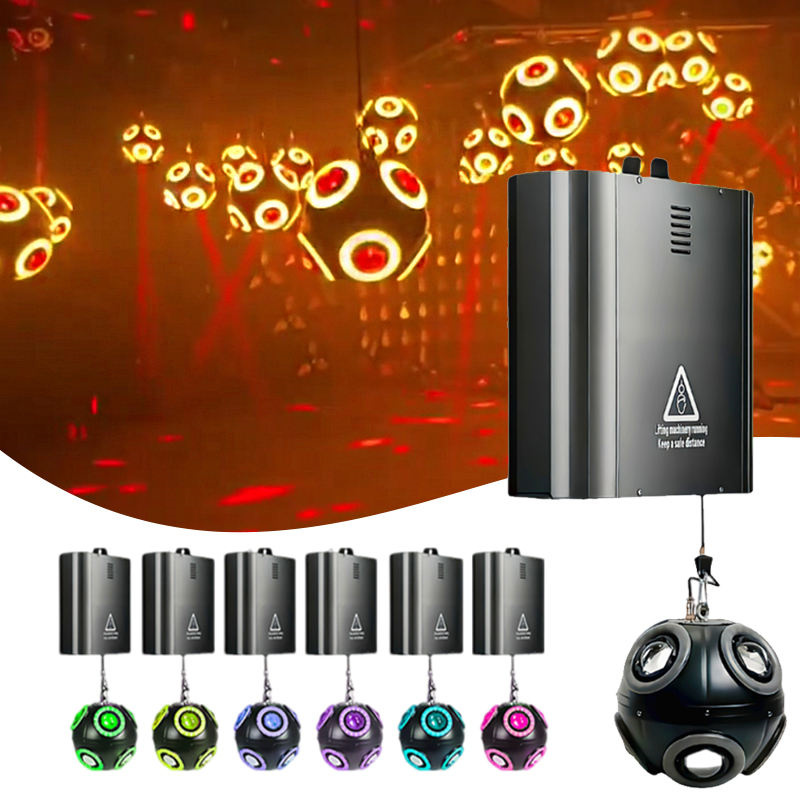
Product reveal lighting demands precision. Kinetic lift ball systems, motorized spotlights, and RGB LED perimeter lighting create the dramatic reveal moments that generate viral social media content and media coverage. Programmable lighting sequences synchronize with reveal music and video content for maximum impact.
Live Entertainment & Hybrid Events
Convention centers increasingly host live concerts, esports tournaments, and hybrid virtual-physical events. These require full concert-grade tech lighting rigs — moving heads, LED strobes, haze systems, and kinetic ceiling arrays — all controlled by professional DMX consoles with real-time beat-sync capabilities.
Science & Innovation Exhibitions
Interactive science exhibitions deploy sensor-responsive LED panels, programmable floor lighting, and 3D sculptural light installations to create immersive educational environments. Visitors interact physically with lighting responses, making technology tangible and memorable for broad audiences.
Why DMX-Protocol Tech Lighting Is the Industrial Standard for Convention Centers
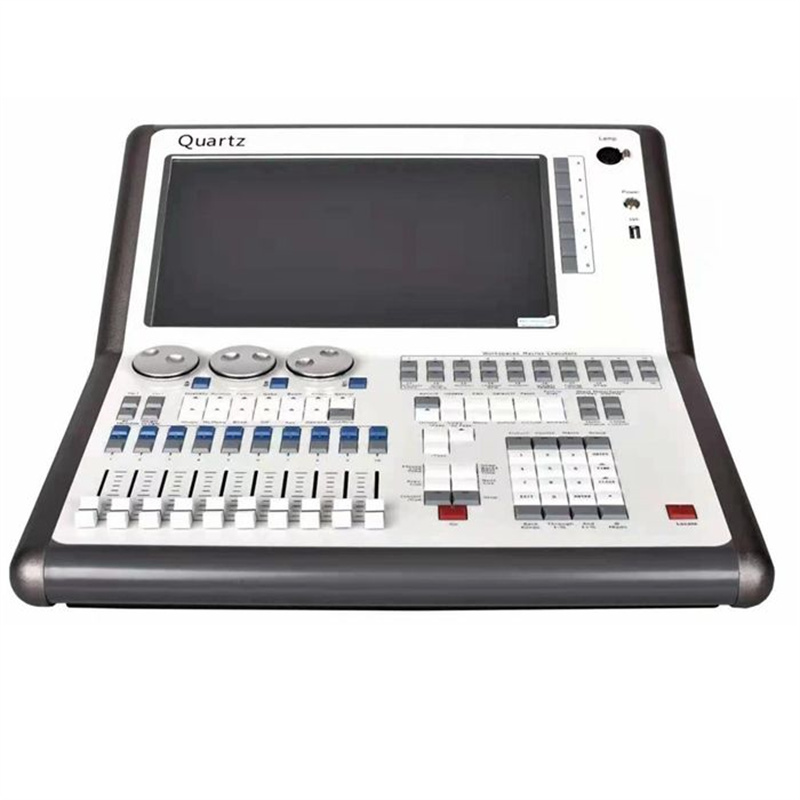
The DMX 512 (Digital Multiplex) protocol has become the universal communication backbone of professional venue lighting worldwide. Developed originally for theatrical use, DMX has evolved to support the staggering complexity of modern large-scale event environments. A single 2048-channel DMX console can independently control hundreds of intelligent fixtures — moving heads, LED pars, strobes, fog machines, kinetic lifts, and architectural wash lights — all from a single operator position with frame-perfect timing accuracy.
For convention center technical directors and event producers, the advantages are decisive: DMX systems offer complete hardware interoperability (any DMX-compatible fixture from any manufacturer can integrate seamlessly), extremely low latency signal transmission, and rock-solid reliability proven across decades of professional use in the world's largest venues.
Professional Standard: Over 95% of large-scale convention centers and exhibition venues globally specify DMX 512 as the mandatory lighting control protocol in their technical rider requirements for event production companies.
The Role of 3D Matrix & Kinetic LED Systems in Modern Exhibition Design
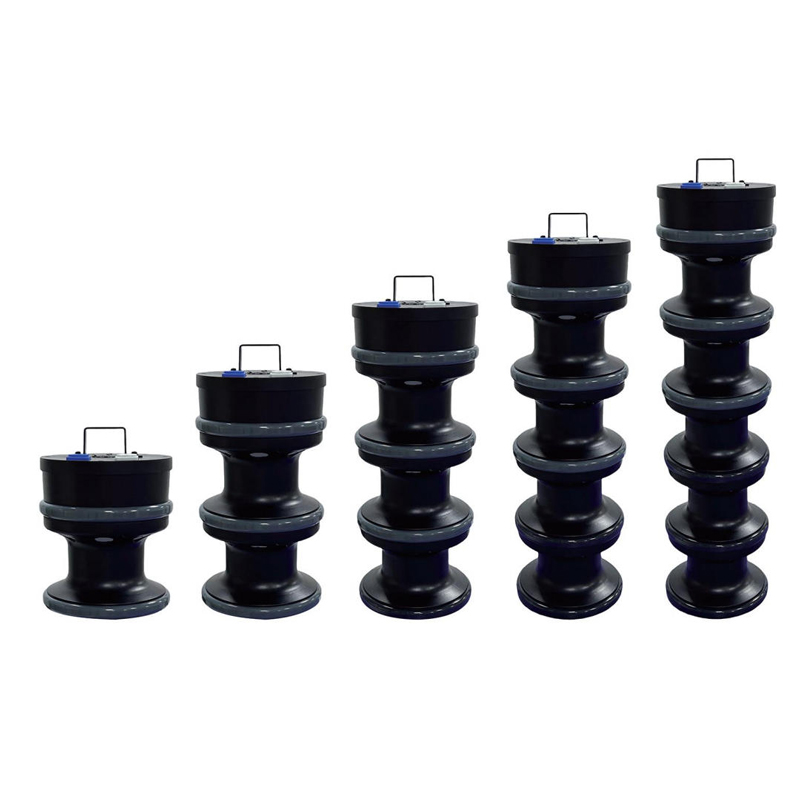
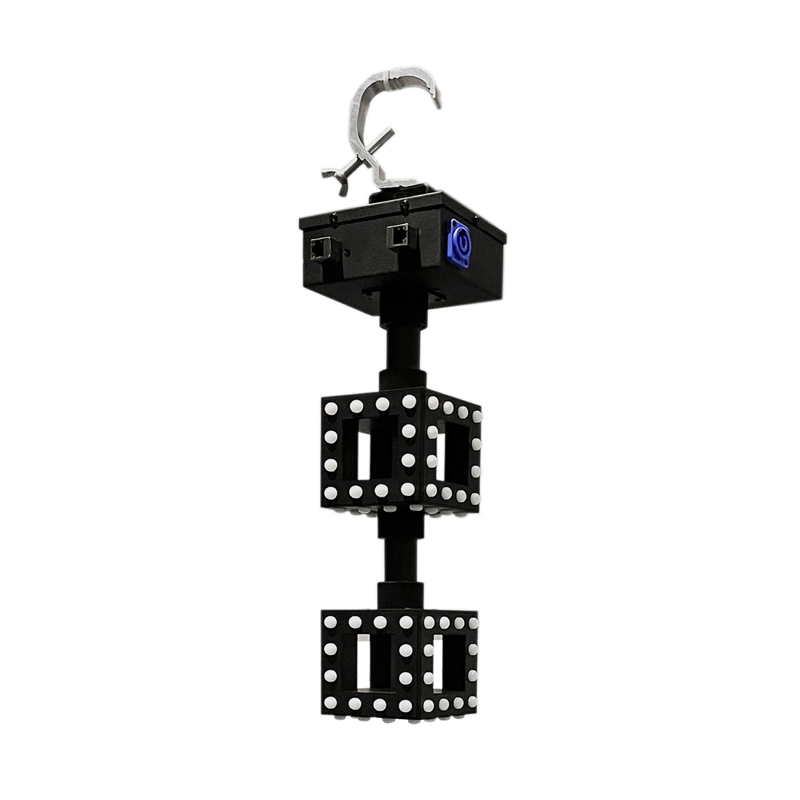
Beyond functional illumination, tech lighting in premium exhibition spaces has become a primary architectural and experiential design medium. 3D matrix LED installations — including bamboo light arrays, gourd light sculptures, and corn light columns — create luminous spatial environments that are impossible to achieve with conventional fixtures. These programmable three-dimensional light structures serve multiple critical functions in large venues:
- Wayfinding and spatial orientation across massive exhibition floor plans spanning hundreds of thousands of square feet
- Brand environment creation — event organizers and corporate sponsors can transform entire hall color schemes with a single scene recall
- Photographic and broadcast aesthetics — distinctive 3D light installations create instantly recognizable visual backdrops that increase media coverage value
- Crowd flow management — dynamic light programming can subtly direct attendee movement patterns throughout complex multi-hall venue layouts
- Architectural accent and façade animation — interior architectural features of convention centers can be dramatically highlighted or transformed through programmable LED wash systems
Kinetic lighting systems — where individual LED units are motorized to rise, descend, rotate, or form programmed geometric patterns in three-dimensional space — represent the frontier of convention center lighting technology. These systems create breathtaking visual effects for event opens, product reveals, and entertainment segments that attendees share widely across social platforms, exponentially amplifying event reach.
Control System Architecture for Multi-Hall Venue Deployments
Large-scale convention centers with multiple concurrent events demand sophisticated multi-layer lighting control architectures. A typical professional installation involves master DMX consoles positioned at each hall's main production position, connected via fiber-optic network backbone to a central venue lighting management system. This architecture allows the venue's technical operations team to monitor all active lighting systems simultaneously while event production crews operate their individual hall consoles with full autonomy.
Advanced lighting control infrastructure for convention centers also integrates with building management systems (BMS), enabling automatic energy optimization during non-event periods, emergency lighting protocol activation, and daylight-responsive dimming in naturally lit hall sections. The result is a venue that operates with maximum technical flexibility for event producers while maintaining minimum energy consumption and maximum operational oversight for facility management teams.
Why Choose Us
Services
Offers professional design, 3D solutions, and marketing support for advertising projects.
Control Systems
We offer advanced lighting control systems that allow for seamless integration and precise control of all lighting fixtures.
Market
Serves over 30,000 companies, including Global 500s, and exports to 30+ countries.
Support
Provides 24h online service with our sales team, we are proficient in multiple languages.
High Quality of The Product
With an excellent management group and technical group, the company will make efforts to increase R & D investment in order to ensure the high quality of the product for clients. Our company's vision is: SINCERE, PROFESSIONAL, INNOVATION.
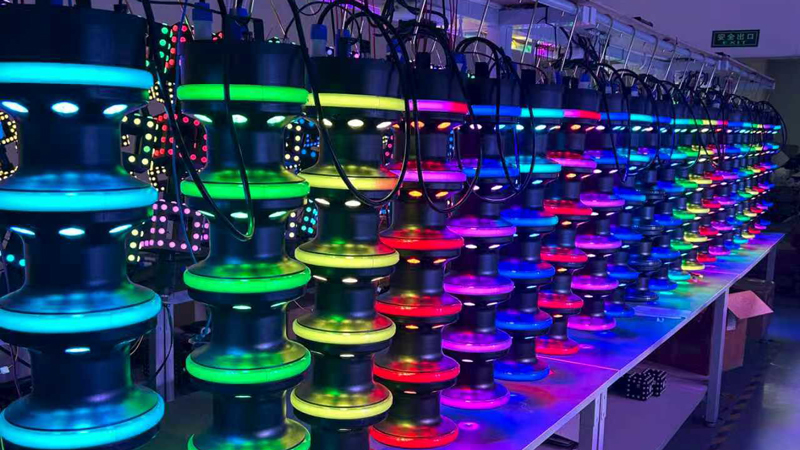
Factory Tour
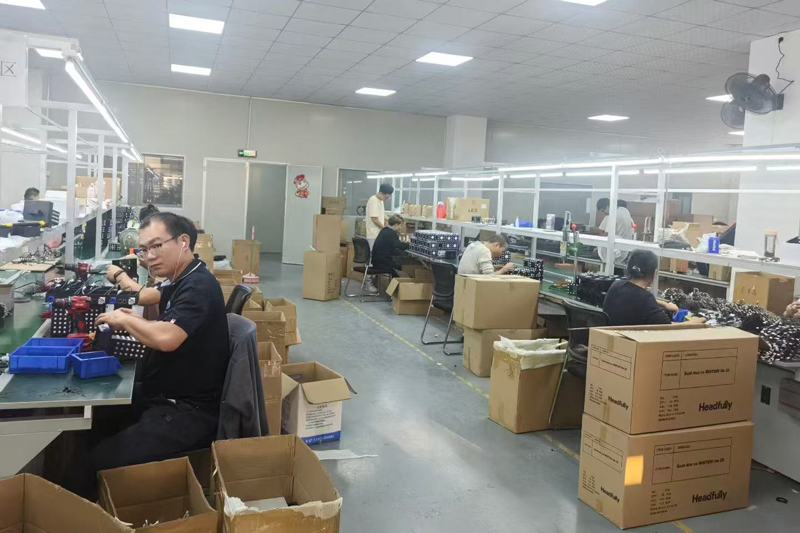
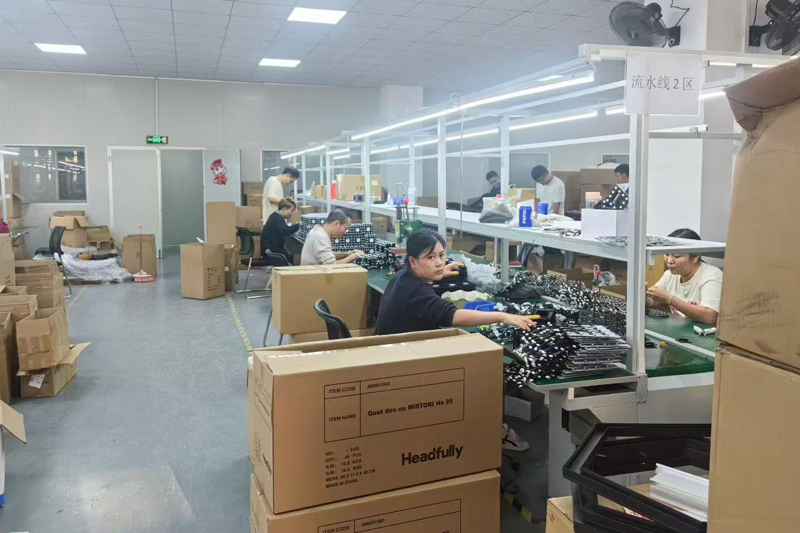
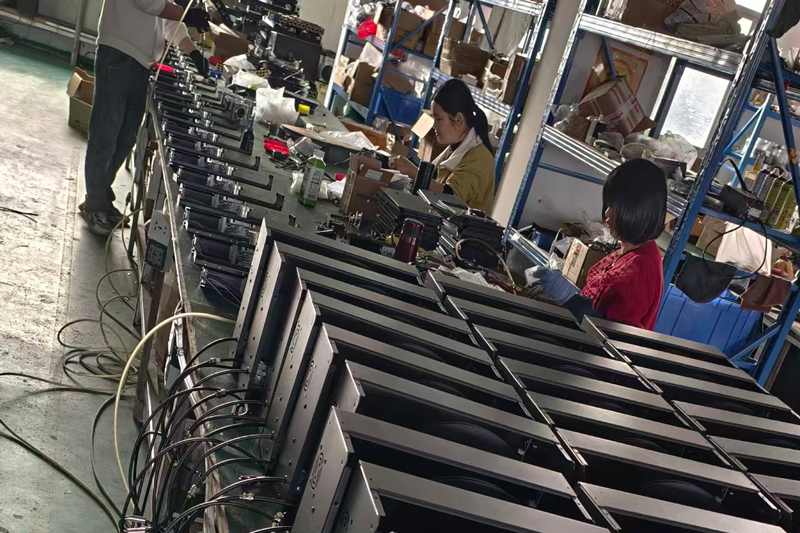
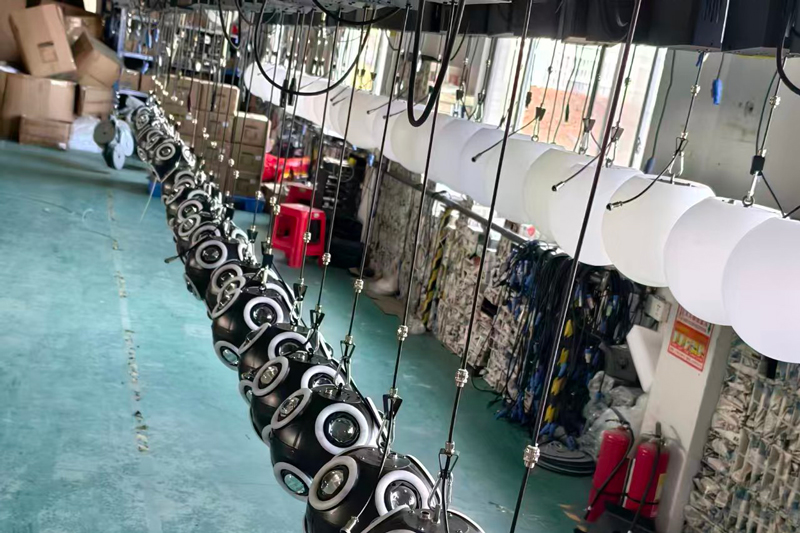
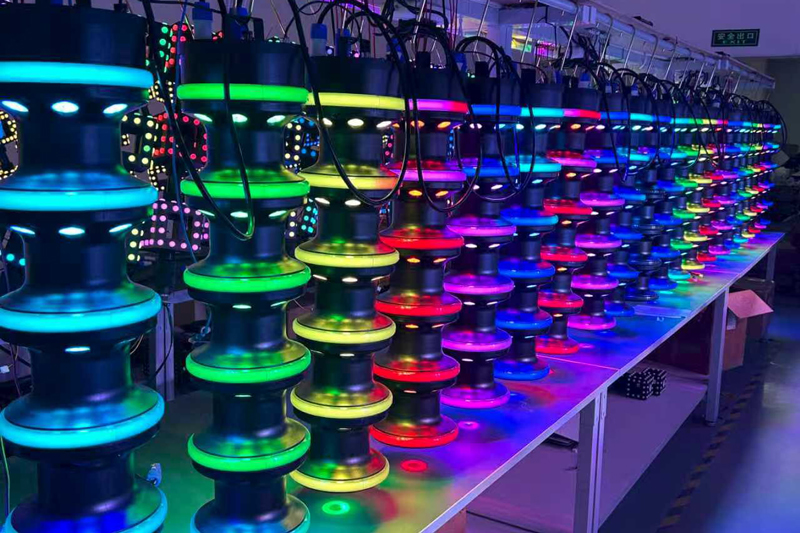
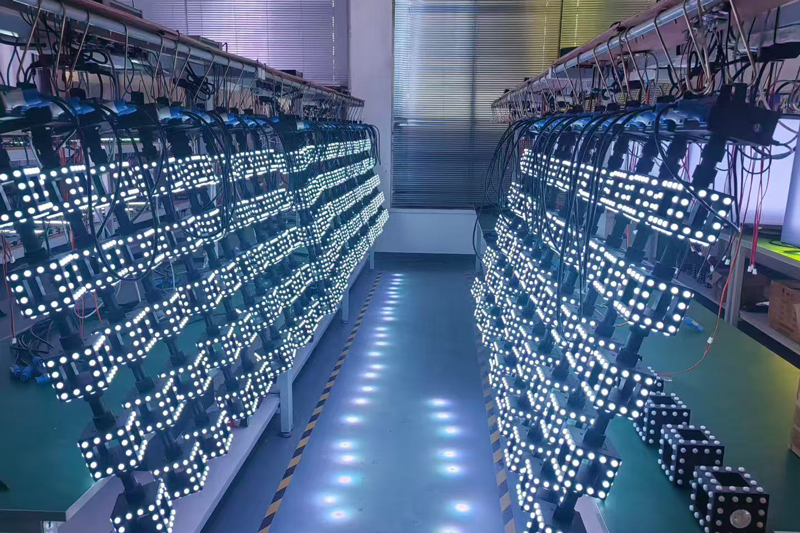
Complete Tech Lighting Product Range for Exhibition & Convention Spaces
-
CONTACT WHATSAPP
-


-
CONTACT WECHAT
-


-
CONTACT ADDRESS
 Huafafengshang, Doumen District, Zhuhai, Guangdong, China
 -
 Huafafengshang, Doumen District, Zhuhai, Guangdong, China
 -
CONTACT NUMBER
-


-
CONTACT E-MAIL
-

