
Featured Studio Lighting Solutions
Core Products for TV Broadcast & Video Production
Industry Insight
The Commercial Broadcasting Lighting Landscape
Transforming the Broadcast Studio with Intelligent LED Lighting
Commercial television broadcasting studios and professional video production sets represent one of the most demanding environments for lighting technology. Every frame captured by a camera is shaped by the quality, color accuracy, consistency, and controllability of the lighting system deployed on set. As broadcast media evolves from traditional standard-definition content to 4K, 8K, and high-dynamic-range (HDR) production, the requirements placed on studio lighting infrastructure have escalated dramatically.
The global market for professional broadcast and studio lighting has undergone a fundamental transformation over the past decade. Legacy tungsten and fluorescent lighting systems — once the backbone of television studios worldwide — have been rapidly displaced by LED-based solutions that offer superior color rendering, dramatically lower energy consumption, instant dimming capability, and an unmatched operational lifespan. According to industry analysts, the professional LED lighting market for broadcasting and film production is projected to surpass $3.2 billion globally by 2027, driven by the proliferation of streaming platforms, the democratization of broadcast-quality video production, and accelerating investment in virtual production infrastructure.
Today, a modern television broadcasting studio is as much a technology platform as it is a physical space. Lighting control systems communicate via DMX, RDM, and IP-based protocols. Fixtures are remotely programmable, color-tunable across the full spectrum from 2700K to 10000K, and capable of replicating virtually any lighting condition from a single control interface. For video production professionals, this means unprecedented creative freedom combined with the operational consistency required for live broadcasting workflows.
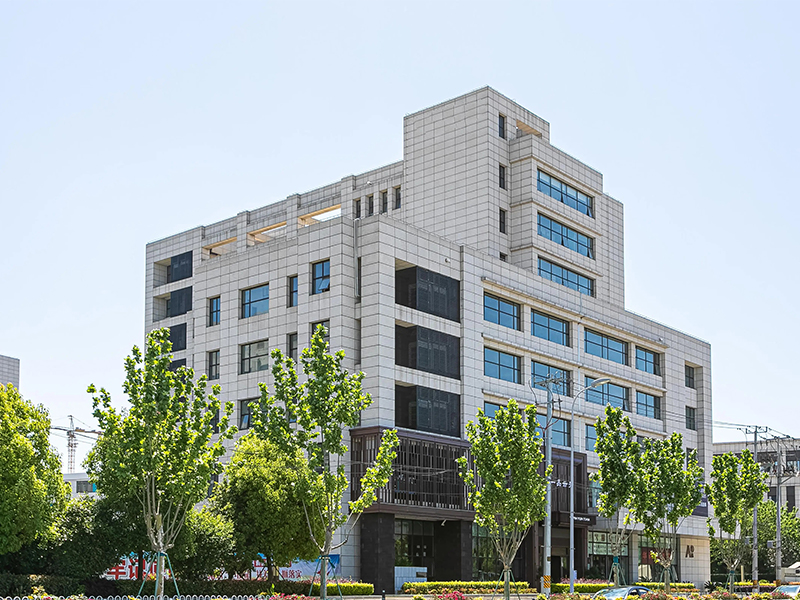
💡 Industry Insight: The shift from traditional HMI and tungsten fixtures to full-spectrum tunable LED systems has reduced energy consumption in broadcast studios by up to 75%, while simultaneously improving color rendering index (CRI) scores to 97+ — a critical benchmark for on-camera color accuracy in HDR and 4K production environments.
Technology Breakdown
Core Lighting Technologies Powering Modern Studios
Tunable White & RGBW LED Engines
Modern broadcast LED fixtures utilize multi-chip RGBW or RGBWW engines that allow seamless color temperature adjustment from warm tungsten (2700K) through daylight (5600K) to cool blue-sky (10000K) without any physical gel or filter changes. This enables news anchors and talk show sets to switch "daylight looks" to "golden-hour warmth" instantly between segments — a capability impossible with legacy fixtures.
DMX 512 & RDM Control Protocols
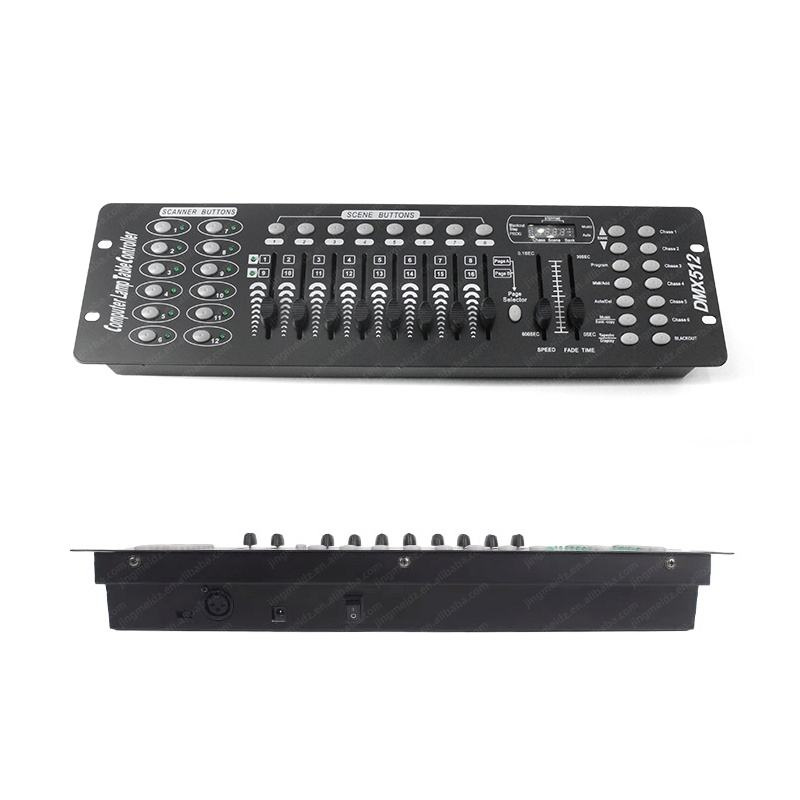
Digital Multiplex (DMX 512) remains the industry-standard control protocol for broadcast lighting, enabling a single control console to manage hundreds of individually addressable fixtures simultaneously. Remote Device Management (RDM) extends this capability by allowing two-way communication — the console can query fixture status, adjust lamp parameters, and receive error reports from each unit in real time, which is essential for mission-critical live broadcast operations.
3D Volumetric & Kinetic LED Fixtures
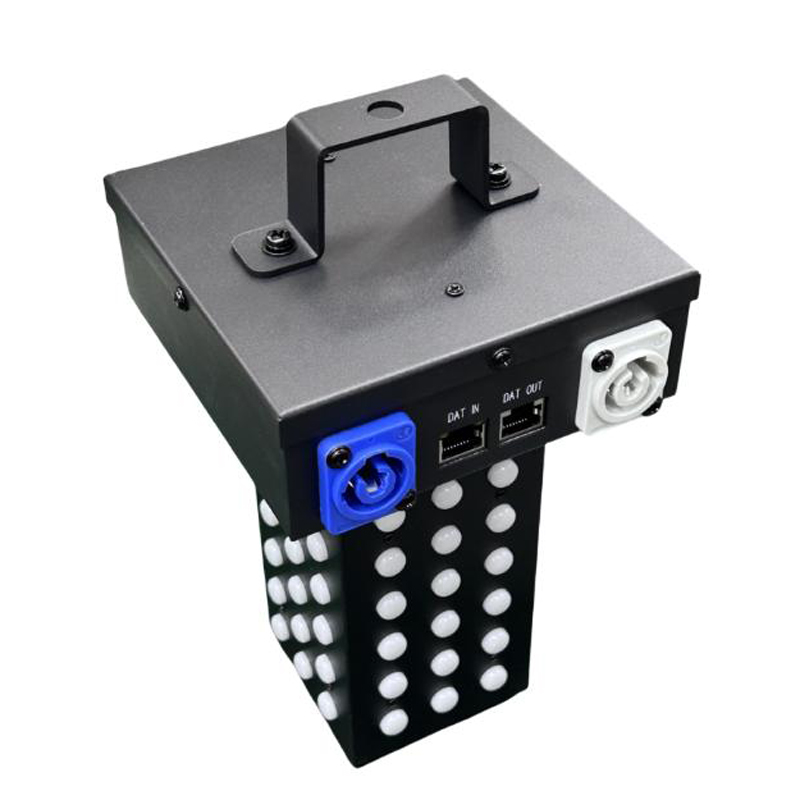
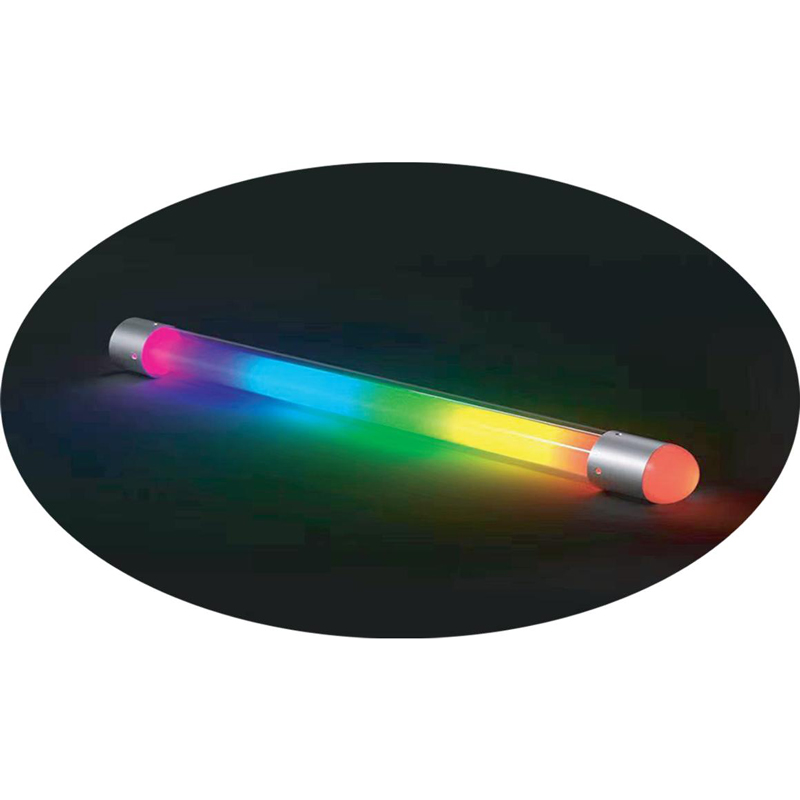
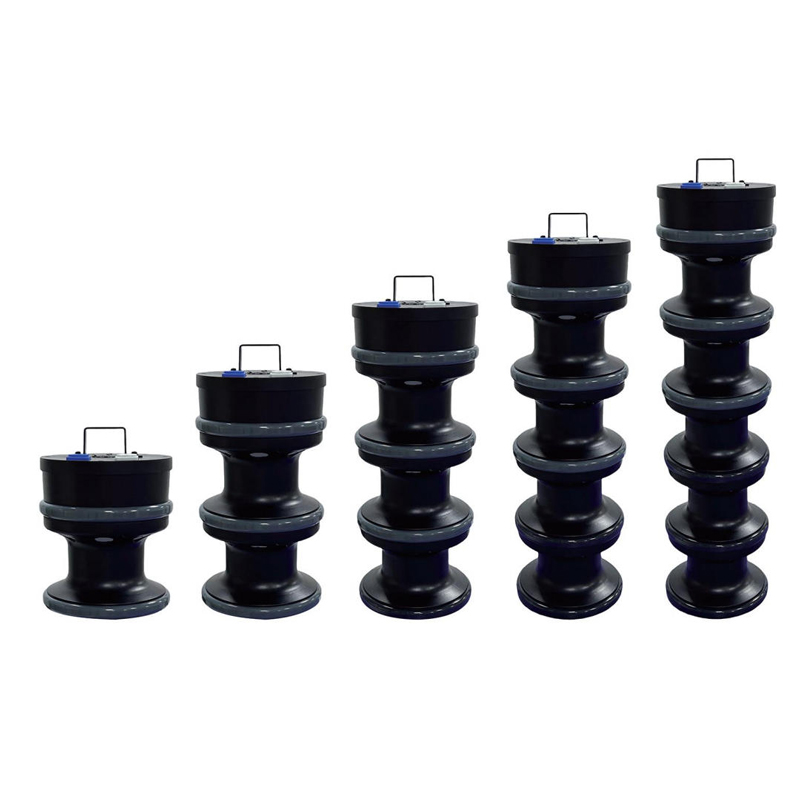
3D kinetic and volumetric LED light fixtures have emerged as a defining aesthetic element in contemporary broadcast and live production design. These fixtures — including linear tubes, geometric pixel arrays, and suspended chandelier-style configurations — move, rotate, and change color under programmed sequences to create dynamic backgrounds, depth layers, and motion graphics that integrate seamlessly with on-screen graphic overlays and LED video wall content.
LED Video Walls & Pixel Mapping
Direct-view LED video walls, combined with pixel-mapping control software such as Madrix, have redefined the possibilities of broadcast set design. High-resolution LED panels can serve simultaneously as background displays, virtual location environments, and interactive lighting elements — a capability that forms the technical foundation of modern virtual production stages, allowing producers to composite photorealistic CGI environments without the limitations of chromakey green screen workflows.
Flicker-Free High-Speed Performance
Broadcasting at 50Hz or 60Hz frame rates — and increasingly at high-speed 120fps for sports and slow-motion content — requires lighting fixtures that operate at flicker-free frequencies well above 1000Hz. Professional broadcast LED drivers engineered for television use incorporate advanced PWM dimming circuits that eliminate visible flicker artifacts at any shutter speed, a critical requirement that consumer-grade LED products simply cannot meet.
Wireless & IP-Networked Lighting Control
The emergence of wireless DMX, DALI-2, and Art-Net/sACN over standard IP networks has eliminated the logistical constraints of cable-intensive broadcast lighting rigs. Wireless control allows rapid set reconfiguration during commercial breaks, enables remote lighting supervision from production control rooms, and supports cloud-based lighting show programming — a critical operational advantage for live broadcast events and touring television productions.
Market Evolution
Development Trends Shaping the Future of Broadcast Lighting
Virtual Production & LED Volume Stages
The adoption of LED volume stages — massive curved LED video walls first popularized by productions like The Mandalorian — is reshaping the economics of location-based television and film production. These environments require tightly integrated lighting control systems where the LED wall content and the physical studio lighting fixtures are synchronized frame-by-frame to create photorealistic interactive lighting on talent and props. Investment in LED volume technology by global broadcasters and streaming platforms is projected to double by 2026, with over 200 dedicated LED volume stages expected to be operational worldwide.
AI-Driven Automated Lighting Systems
Artificial intelligence is beginning to penetrate broadcast lighting control in meaningful ways. AI-assisted lighting engines can analyze live camera feeds and automatically adjust fixture intensity, color temperature, and directionality to maintain consistent exposure and color balance as talent moves across the set. Machine learning models trained on broadcast colorimetry data are enabling lighting consoles to make micro-adjustments that would previously require an experienced lighting director's full attention — dramatically reducing crew requirements for mid-scale broadcast productions.
HDR & Wide Color Gamut Production Standards
The industry-wide transition to HDR content standards (HDR10, Dolby Vision, HLG) is placing stringent new demands on broadcast lighting systems. Fixtures must now deliver consistent color performance across the extended Rec. 2020 wide color gamut, with white points accurately maintained throughout the full dimming range. Manufacturers are responding with next-generation phosphor LED emitters and precision color mixing algorithms that meet the technical specifications of streaming platforms and broadcast networks with HDR delivery requirements.
Sustainable Studio Operations & Green Certification
Environmental sustainability has emerged as a boardroom priority for major broadcast organizations. The transition to LED lighting systems is one of the most impactful sustainability initiatives available to studio operators, with typical energy savings of 60-80% compared to conventional broadcast fixtures. Several international broadcasters — including major European public service networks — have committed to carbon-neutral production operations by 2030, with LED studio lighting upgrades forming a central pillar of their green transition roadmaps.
Deep-Dive Applications
Lighting Application Scenarios in Commercial Broadcasting
News & Live Broadcast Studios
News studio lighting demands absolute consistency in color temperature and intensity throughout broadcast hours. Tunable white LED panels installed in a combination of key, fill, and backlight positions allow news directors to match on-air talent skin tones perfectly across different set configurations. Softbox-style LED panels with high CRI values (95+) ensure that graphics, maps, and screen content integrated into the set are accurately reproduced on camera. Modern news studios increasingly incorporate dynamic LED backdrop systems that can display breaking news graphics, weather data visualizations, and live camera feeds as an interactive environmental layer behind anchors and correspondents.
Entertainment & Variety Show Production
Entertainment television demands a lighting system capable of dramatic transformation within seconds — shifting from an intimate interview setup to a full-production performance environment between commercial breaks. This requires a comprehensive toolkit of motorized moving head fixtures, programmable LED pixel panels, kinetic suspended light rigs, and stage-quality beam and wash fixtures, all unified under a single DMX control console. 3D volumetric lighting elements — including pixel tube arrays, suspended matrix light structures, and interactive LED floor systems — create visual depth and spectacle that distinguishes premium entertainment content in an increasingly competitive streaming market.
Sports Broadcasting & Live Events
Sports broadcasting lighting must balance two distinct requirements: providing flicker-free, high-intensity illumination for ultra-slow-motion camera systems capturing action at 120fps or higher, while simultaneously creating immersive atmospheric effects for pre-match shows, halftime entertainment, and highlight packages. LED stadium and arena lighting systems engineered for broadcast use offer remotely adjustable color temperature, instant dimming without warm-up periods, and precise beam control — enabling production teams to transition seamlessly between clinical match illumination and dramatic theatrical lighting for on-screen presentation sequences.
Online Streaming & Content Creator Studios
The explosive growth of independent streaming content — across platforms including YouTube, Twitch, and emerging social video formats — has created a new category of broadcast-quality studio lighting demand at a more accessible price point. Content creators building professional home and micro-studio environments require LED panel systems that deliver broadcast-grade color accuracy and controllability without the infrastructure investment of traditional broadcast facilities. Compact pixel panel lighting, bicolor LED softboxes, and RGBW accent lighting systems provide this capability in a format optimized for smaller production environments operating with reduced crew sizes.
Music Television & Performance Stages
Music television programming and broadcast concert productions are among the most technically demanding applications for studio lighting. These environments require seamlessly coordinated integration of beam fixtures, strobe effects, pixel tube installations, and moving head wash lights — all synchronized to musical tempo via MIDI or timecode triggering. 3D kinetic light rigs incorporating programmable linear tubes and suspended geometric pixel structures create the multilayered visual environment essential for broadcast music performance content. Advanced lighting controllers such as full-feature DMX consoles with timeline programming capabilities enable lighting designers to choreograph complete lighting performances that repeat with precise consistency across multiple show recordings.
Virtual & Extended Reality Productions
The integration of virtual reality (VR), augmented reality (AR), and extended reality (XR) technologies into live broadcast production represents the most technically complex lighting challenge in the contemporary industry. Lighting systems in XR production environments must work in exact photometric synchronization with the LED video wall content to ensure that virtual CGI elements are composited with physically accurate light and shadow falling on talent. This requires calibrated lighting rigs capable of reproducing the precise intensity, color, and directionality of simulated virtual light sources — a capability enabled by advanced pixel mapping software controlling high-density LED fixture arrays across the entire studio volume.
Our Company
About Xiaosan — Professional Broadcast Lighting Manufacturer
Who We Are
Xiaosan, was created by Mrs Ami Q and her husband Mr. Ahren Z, founded in 2019, located in Guangdong province, is a professional factory specializing in providing LED lighting solutions for nightclub, DJ disco and various entertainment venues. Our main products include high-quality lighting fixtures such as lifting spherical lights, Kinetic Light, LED effect light, LED Screen, LED Dance Floors, 3D effect lights, scanning lights, moving head lights and more.
The factory covers an area of 1000 square meters and is equipped with advanced production equipment and a complete R&D team to ensure that every product meets the highest industry standards. Currently, our team consists of 30 experienced employees who specialize in lighting technology and has rich experience and professional knowledge in the field of production and manufacturing.
Our Capabilities
What We Have — Full-Spectrum Studio Lighting Services
One-stop Services
Xiaosan not only provides lighting production, but also integrates research and development, design, installation and commissioning, providing one-stop services to meet the diverse needs of customers. We adhere to the core concept of "innovation, quality, and service", constantly introducing the latest technologies to enhance product performance. From initial concept design through to on-site installation and final commissioning for commercial television broadcasting studios and video production sets, our team provides comprehensive technical support at every stage of your project.
Superior Quality Assurance
Whether it's a small event or a large-scale performance, Xiaosan is always available at your service. In the new century, the company's success lies in its superior quality assurance and first-class after-sales service. All products come with a three-year warranty. We offer competitive prices and strive to meet customer needs. Every fixture and control system we manufacture for broadcast and video production applications undergoes rigorous flicker-frequency testing, color calibration verification, and thermal performance validation before shipment — ensuring broadcast-grade reliability in every deployment.
Complete Product Range
All Lighting Solutions for TV Studios & Video Production Sets
-
CONTACT WHATSAPP
-


-
CONTACT WECHAT
-


-
CONTACT ADDRESS
 Huafafengshang, Doumen District, Zhuhai, Guangdong, China
 -
 Huafafengshang, Doumen District, Zhuhai, Guangdong, China
 -
CONTACT NUMBER
-


-
CONTACT E-MAIL
-

