
Featured Lighting Solutions For Digital Art & Tech Exhibitions
Precision-engineered event lighting products purpose-built for immersive gallery environments and cutting-edge technological showcases.
Redefining Space: How Event Lighting Transforms Immersive Digital Art Galleries
The global art and exhibition industry has undergone a profound transformation over the past decade. Immersive digital art galleries—venues where visitors don't merely observe but physically inhabit a curated world of light, sound, and motion—have emerged as one of the fastest-growing segments in the creative economy. At the very heart of this revolution is event lighting: the discipline of designing, engineering, and deploying advanced illumination systems that breathe life into digital installations and technological exhibitions.
From Tokyo's teamLab to Paris's Atelier des Lumières, and from Las Vegas's immersive experience venues to the world's leading technology trade fairs such as CES and MWC, event lighting has evolved from a purely functional support role into the primary artistic and experiential medium. The ability to synchronize thousands of individually addressable LED nodes, project precise chromatic gradients across architectural surfaces, and choreograph kinetic light sculptures in real time has fundamentally changed how brands, artists, and institutions communicate with audiences.
This article explores the commercial landscape, emerging technology trends, and deep application scenarios of event lighting specifically designed for immersive digital art galleries and technological exhibitions, providing a comprehensive guide for venue operators, exhibition designers, event producers, and procurement specialists worldwide.
Industry Landscape & Commercial Status of Event Lighting
The commercial event lighting sector serving immersive art and tech exhibitions is defined by three converging forces: the democratization of programmable LED technology, the rise of experiential marketing as a brand strategy, and the global expansion of cultural tourism centered on spectacular light installations.
Market Drivers & Commercial Momentum
Major exhibition centers in Dubai, Singapore, London, New York, and Shanghai have committed billions in venue upgrades specifically to enable high-density LED matrix deployments, kinetic lighting rigs, and real-time DMX-controlled environments. The technology exhibition segment—spanning product launches, corporate showcases, and international trade fairs—has adopted immersive lighting as the default standard for high-impact presentations. Fortune 500 technology companies now routinely allocate 15–25% of their total event production budgets to lighting design and control infrastructure.
Supply Chain & Manufacturing Evolution
China-based LED lighting manufacturers have emerged as the dominant global suppliers for event-grade products, combining advanced semiconductor fabrication, vertically integrated supply chains, and aggressive R&D investment. With ISO-certified manufacturing facilities, automated SMT production lines, and rigorous product validation protocols including temperature cycling, vibration resistance, and photometric testing, leading manufacturers now deliver products that match or exceed European and North American branded competitors at substantially lower cost-to-performance ratios.
The industry has also seen significant consolidation, with large-scale factories producing complete lighting ecosystems—from individual pixel nodes and panel arrays to full DMX control consoles and kinetic winch systems—enabling single-vendor procurement for complex exhibition projects worldwide.
Emerging Technology Trends In Exhibition Event Lighting
The event lighting industry is being reshaped by a convergence of hardware innovation, software intelligence, and new material science. Here are the defining trends.
● AI-Driven Lighting Choreography
Machine learning algorithms now analyze spatial occupancy data, audience movement patterns, and real-time music or content beats to dynamically adapt lighting scenes without manual programming. AI controllers can generate thousands of unique lighting sequences that evolve throughout an exhibition's run, ensuring no two visitor experiences are identical.
● High-Density Pixel Mapping & 3D LED Arrays
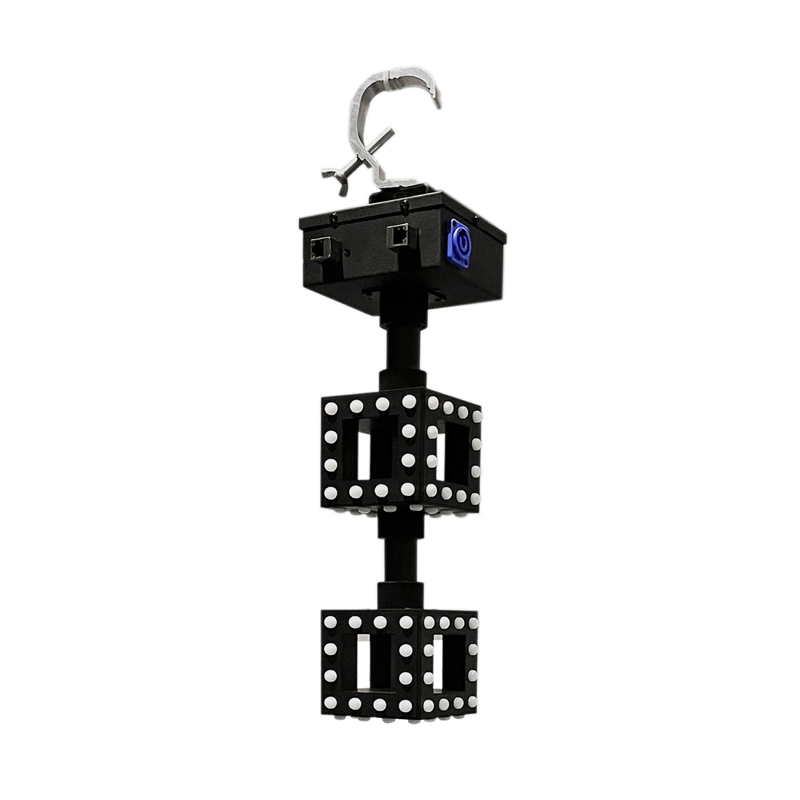
The shift from conventional wash and spot fixtures to three-dimensional pixel-mapped LED matrices represents the most significant hardware evolution in a decade. Products like 3D matrix tube systems and sculptural gourd lights enable exhibition designers to construct volumetric light environments that respond to real-time generative graphics at up to 60fps refresh rates.
● Kinetic Lighting Integration
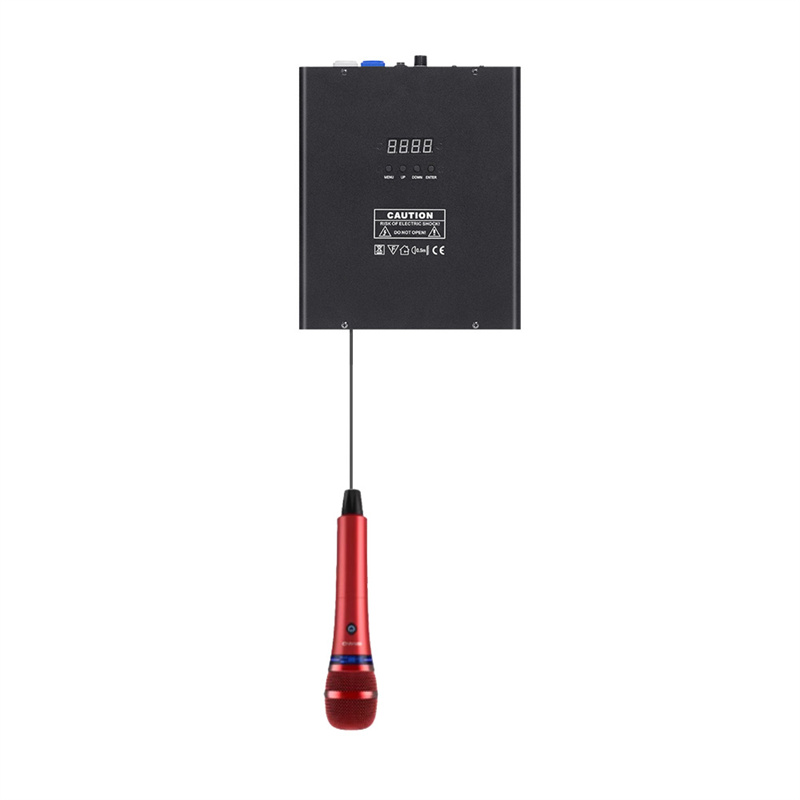
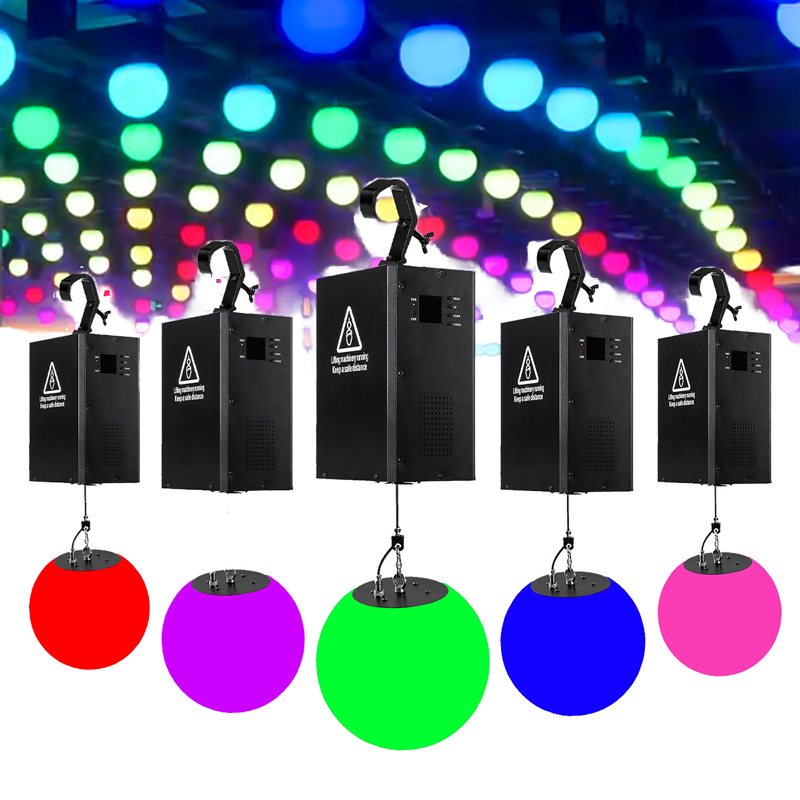
Motorized, DMX-controlled kinetic lighting rigs—where individual luminaires are suspended on programmable winch systems—create dynamic three-dimensional choreography that traditional fixed installations cannot achieve. The kinetic lighting segment is growing at over 22% CAGR, driven by immersive art venues and technology product launches requiring dramatic spatial transformation.
● Wireless & IP-Based Control Protocols
The transition from legacy DMX512 hardwired topologies to Art-Net, sACN, and KiNET over IP networks—combined with wireless DMX via RDM protocols—dramatically reduces installation complexity and enables distributed control architectures across large-footprint exhibition venues and multi-zone digital art installations.
● Sustainable LED Ecosystems
The shift to high-efficacy LED sources (130–220 lm/W) combined with intelligent dimming and presence-based control has made event lighting operations 70–80% more energy efficient than equivalent tungsten or HID installations. Carbon-neutral exhibition certification programs increasingly mandate LED-exclusive lighting infrastructure.
● Interactive & Sensor-Responsive Environments
Integration of LiDAR, infrared depth cameras, and capacitive touch sensors with lighting control systems creates genuinely reactive installations where visitor proximity, gestures, or biometric data (heartbeat, gaze direction) trigger real-time light behaviors—pushing the boundary between audience and artwork into entirely new territory.
Deep Application Scenarios: Event Lighting In Action
Understanding where and how advanced event lighting is deployed at scale unlocks its full commercial and artistic potential.
Permanent Immersive Digital Art Venues
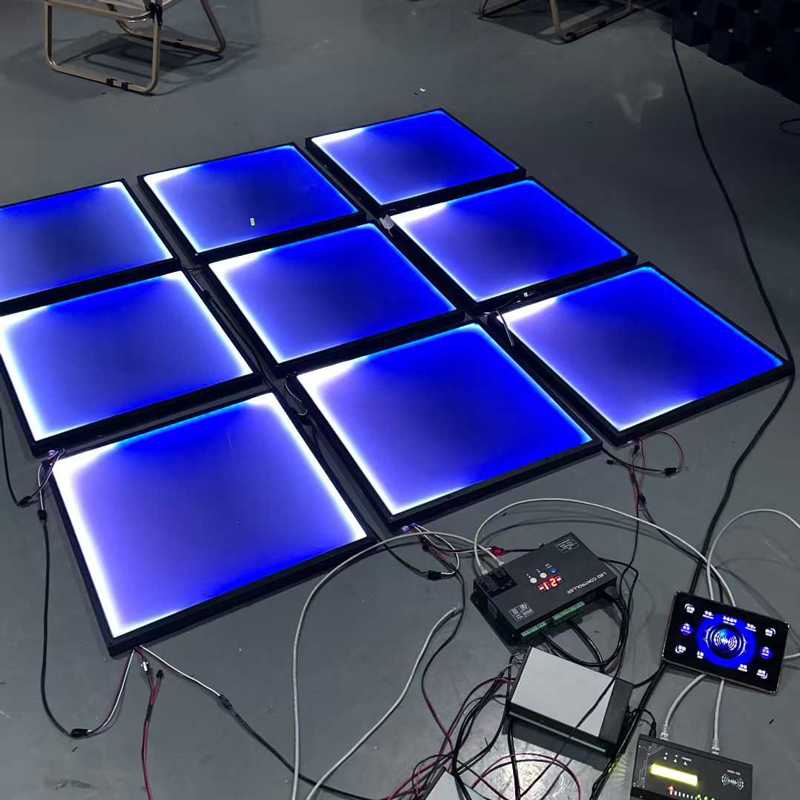
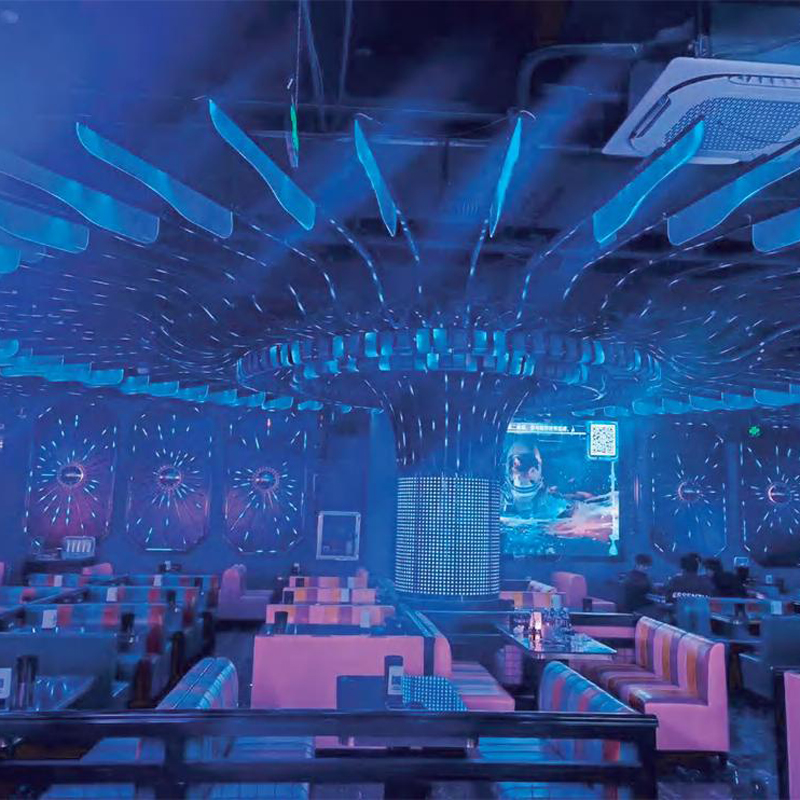
Purpose-built immersive galleries like teamLab Borderless, Superblue, and similar operators deploy permanent high-density LED pixel systems across floor, wall, and ceiling planes totalling tens of thousands of individually addressable nodes. The lighting control infrastructure operates 365 days per year, requiring products with MTBF ratings exceeding 50,000 hours and hot-swap component accessibility. Modular LED panel systems with arbitrary splicing capability are essential for the irregular architectural geometries of converted warehouse and industrial spaces that characterize this venue typology.
Technology Trade Fairs & Corporate Product Launches
At events such as CES Las Vegas, MWC Barcelona, and regional tech expos across Asia, lighting designers use DMX-controlled elevating and kinetic systems to create dramatic reveal moments for product launches. Programmable elevation systems allow luminaires to descend from grid heights at precisely choreographed speeds synchronized to video content, creating multi-sensory reveal sequences. The 2048-channel DMX console capability is critical for managing the complexity of large booth environments with dozens of independently controlled zones.
Museum & Cultural Institution Exhibitions
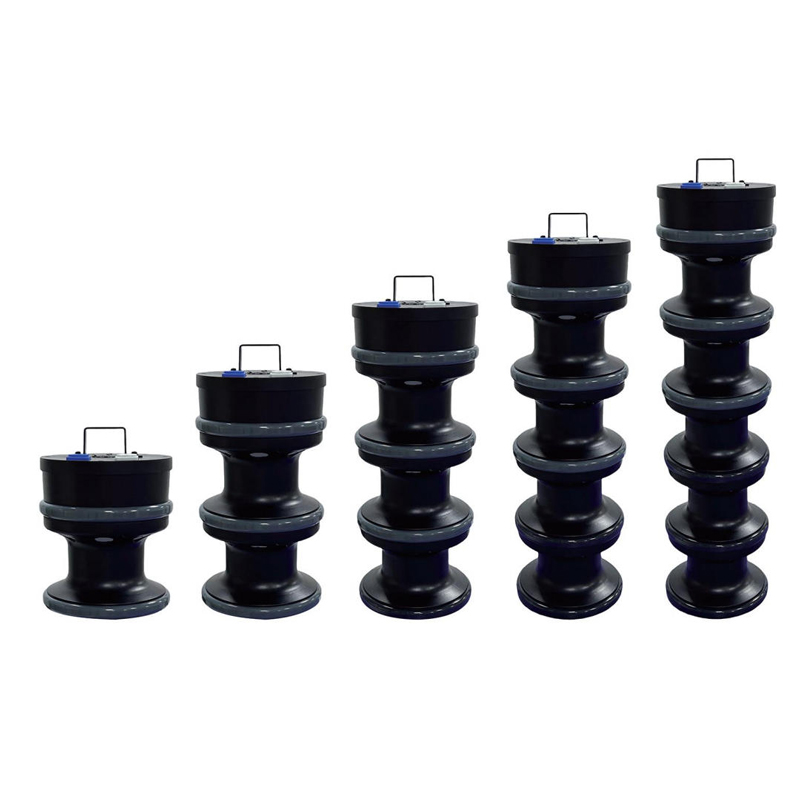
Major museums deploying touring digital art exhibitions—from the Musée d'Orsay to the National Palace Museum—require portable, rapidly deployable lighting systems that can transform neutral gallery spaces into immersive environments within 24–72 hour installation windows. Pixel UFO bar lights and cloud tube systems excel in this context, offering flexible mounting configurations and rapid connectivity that meet museum operational constraints while delivering the visual impact required by international touring exhibition standards.
Brand Activation & Experiential Marketing Events
Global brands from automotive to luxury fashion deploy immersive lighting environments for pop-up activations, product launches, and VIP experiences. The typical brief demands complete environmental transformation—turning a blank white room or outdoor space into a branded light world within hours. 3D sculptural LED installations, kinetic RGBW winch systems, and programmable DMX environments deliver the "shareable moment" social media visibility that justifies the lighting investment as a core marketing channel with measurable audience reach metrics.
Architectural Projection Mapping Support Lighting
Projection mapping on architectural surfaces requires precisely tuned ambient lighting environments that do not wash out projected imagery while creating depth and dimensionality in non-projected zones. LED panel systems with accurate CCT control and high CRI performance are used to create complementary ambient environments that enhance projected content rather than competing with it, enabling hybrid LED-projection installations that deliver superior visual impact compared to projection-only approaches.
Night Economy & Entertainment District Lighting
Urban night economy development—a major policy priority in cities across Asia, the Middle East, and Europe—relies heavily on permanent and seasonal immersive lighting installations to drive foot traffic, extend visitor dwell time, and create distinctive destination identity. 3D bamboo matrix installations, luminous gourd sculpture arrays, and programmable cloud tube systems are increasingly deployed as semi-permanent urban lighting art that transforms streetscapes, plazas, and cultural precincts into year-round visitor attractions with measurable economic impact.
Technical Specifications That Define Exhibition-Grade Event Lighting
For procurement specialists and technical directors evaluating event lighting solutions for immersive gallery and technology exhibition environments, the following technical parameters define the boundary between consumer-grade and professional exhibition-grade products:
- DMX Universe Capacity: Professional exhibition lighting systems require DMX consoles capable of managing 2048 channels or more per universe, with multi-universe capability for large-venue deployments.
- Pixel Refresh Rate: For video-synchronized pixel-mapped installations, a minimum 1000Hz refresh rate prevents flickering artifacts in video recordings and broadcast content.
- Color Gamut & CRI: RGBW LED systems with CRI >90 and extended gamut coverage (including deep saturates and pastel tones) are essential for color-accurate rendering across the full spectrum of digital art content.
- IP Rating: Outdoor and humid-environment installations require minimum IP65 protection; permanent outdoor sculptural installations demand IP67 or IP68 rated products.
- Kinetic System Safety: DMX-controlled winch systems used for kinetic lighting must be certified to relevant EN and IEC standards for load-bearing rigging, with independent safety cable requirements per unit.
- Control Ecosystem Integration: Art-Net, sACN, and MIDI protocol support enables seamless integration with industry-standard media servers (Resolume, disguise, Notch) used in professional immersive art production pipelines.
Selecting The Right Event Lighting Partner For Your Exhibition Project
The complexity of event lighting projects for immersive digital art galleries and technology exhibitions demands a supply partner who offers more than products—the ideal partner delivers comprehensive project engineering support from concept through commissioning. Key capabilities to evaluate include: 3D photometric simulation and pre-visualization services; DMX system architecture design and network topology engineering; multilingual technical support available around the clock for international project timelines; and a global logistics network capable of delivering exhibition-grade equipment to project sites worldwide with minimal lead times.
With a global client base spanning Fortune 500 corporations, leading cultural institutions, and independent exhibition studios across 30+ countries, our manufacturing and engineering capabilities have been validated at the highest levels of international exhibition production. Our product range—from individual pixel LED nodes and panel arrays to complete DMX control consoles and kinetic winch systems—provides a fully integrated single-vendor solution for projects of any scale.
Why Choose Us
Services
Offers professional design, 3D solutions, and marketing support for advertising projects.
Control Systems
We offer advanced lighting control systems that allow for seamless integration and precise control of all lighting fixtures.
Market
Serves over 30,000 companies, including Global 500s, and exports to 30+ countries.
Support
Provides 24h online service with our sales team, we are proficient in multiple languages.
High Quality of The Product
With an excellent management group and technical group, the company will make efforts to increase R & D investment in order to ensure the high quality of the product for clients. Our company's vision is: SINCERE, PROFESSIONAL, INNOVATION.
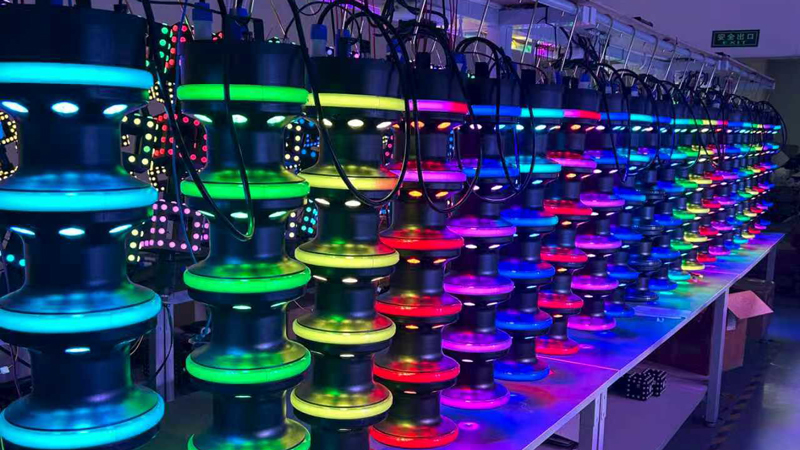
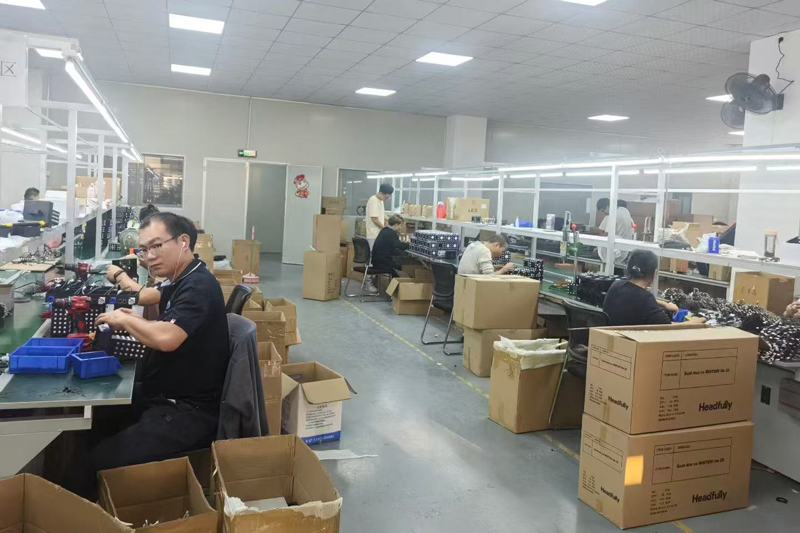
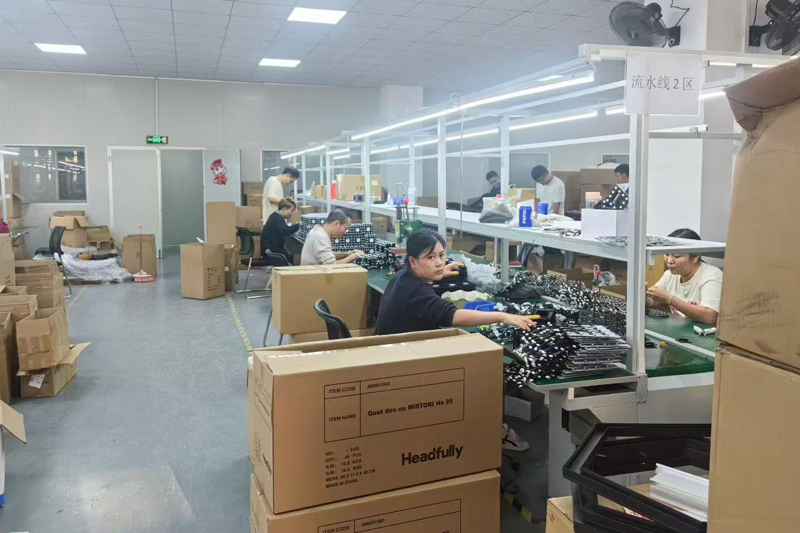
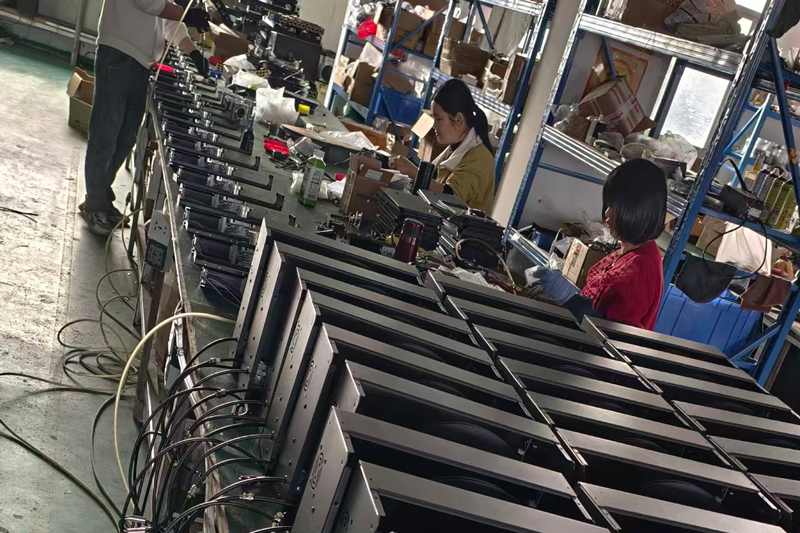
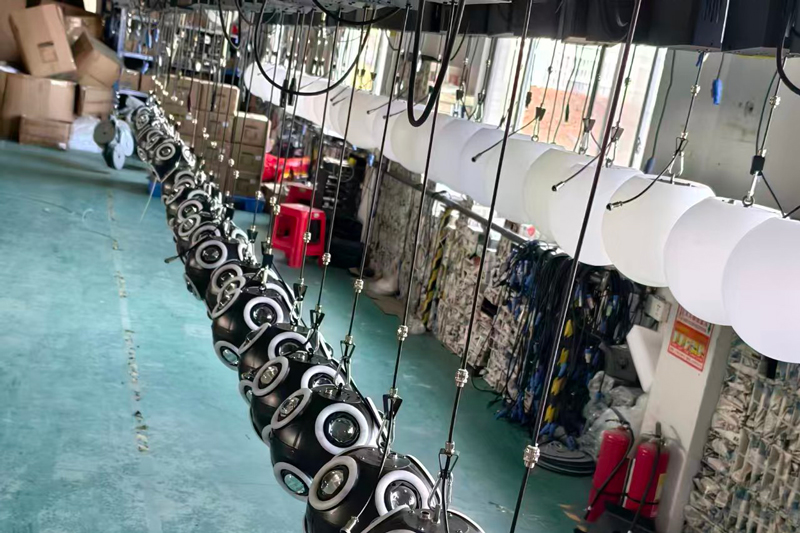
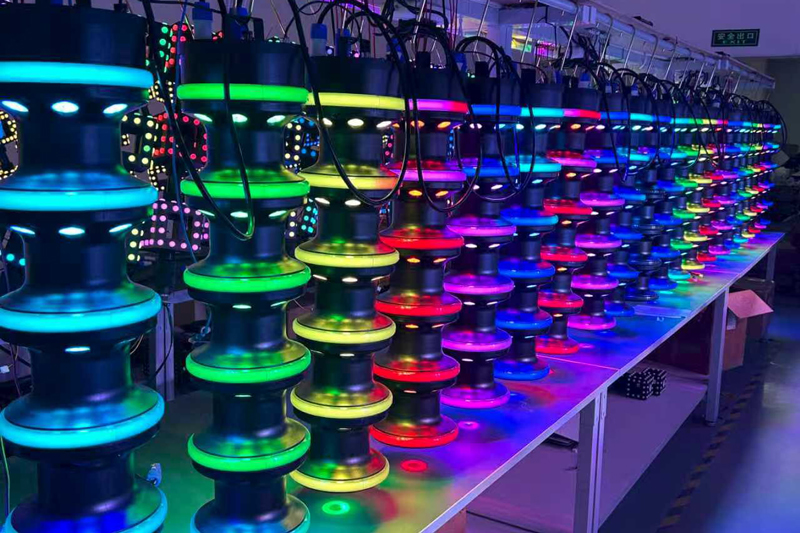
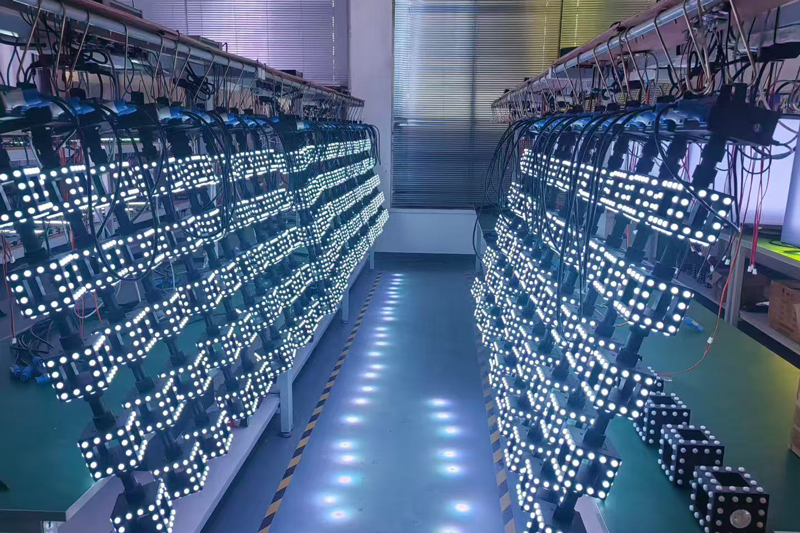
Factory Tour
Our state-of-the-art manufacturing facilities ensure every event lighting product meets the highest quality standards for immersive gallery and exhibition deployment worldwide.
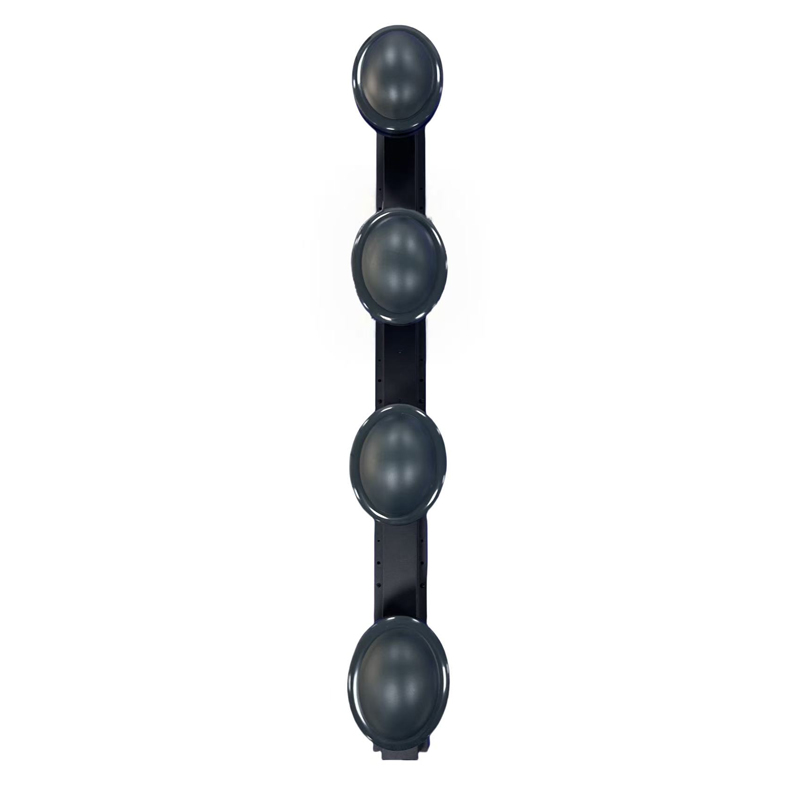
Complete Event Lighting Product Range For Immersive Exhibitions
Explore our full portfolio of professional LED event lighting systems engineered for digital art galleries, technology exhibitions, and large-scale immersive experiences.

-
CONTACT WHATSAPP
-


-
CONTACT WECHAT
-


-
CONTACT ADDRESS
 Huafafengshang, Doumen District, Zhuhai, Guangdong, China
 -
 Huafafengshang, Doumen District, Zhuhai, Guangdong, China
 -
CONTACT NUMBER
-


-
CONTACT E-MAIL
-

